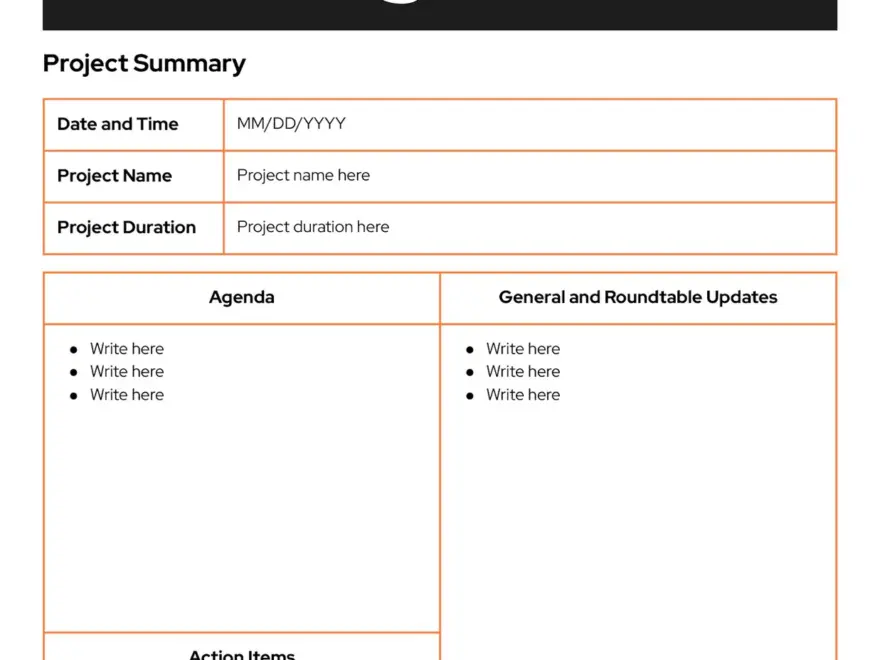
Meeting minutes are the official memory of your organization. A reliable non profit meeting minutes template helps you capture decisions, votes, and assignments in a consistent format, so your board stays accountable and anyone can understand what happened months or years later.
Good minutes also protect your nonprofit. Auditors, funders, and regulators often review them as proof of responsible governance. A simple, repeatable template removes guesswork for the secretary and ensures nothing important slips through the cracks.
Essential Elements to Include
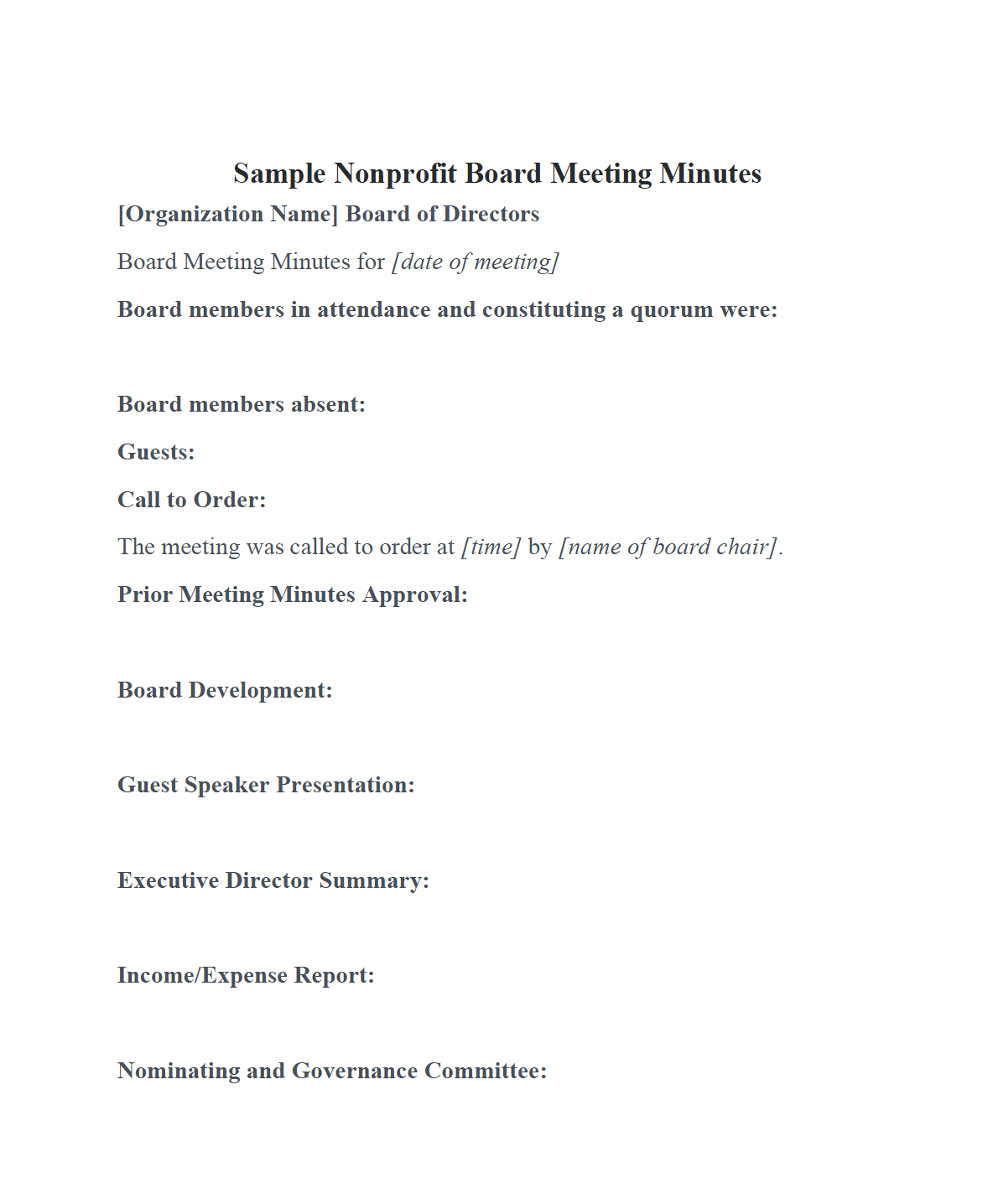
Begin with the basics: the organization’s name, meeting type, date, time, and location or video link. Note whether the meeting is regular, special, or committee-based. This header gives each record context and makes filing and searching far easier.
Record attendance carefully. List board members present, members absent, staff, and guests, and state whether a quorum was reached. Quorum matters because votes taken without it may not be valid under your bylaws.
Document approval of the previous minutes and the agenda. Include any corrections made before approval. This creates a clear chain of records, showing that the board reviewed and accepted prior decisions before moving on to new business.
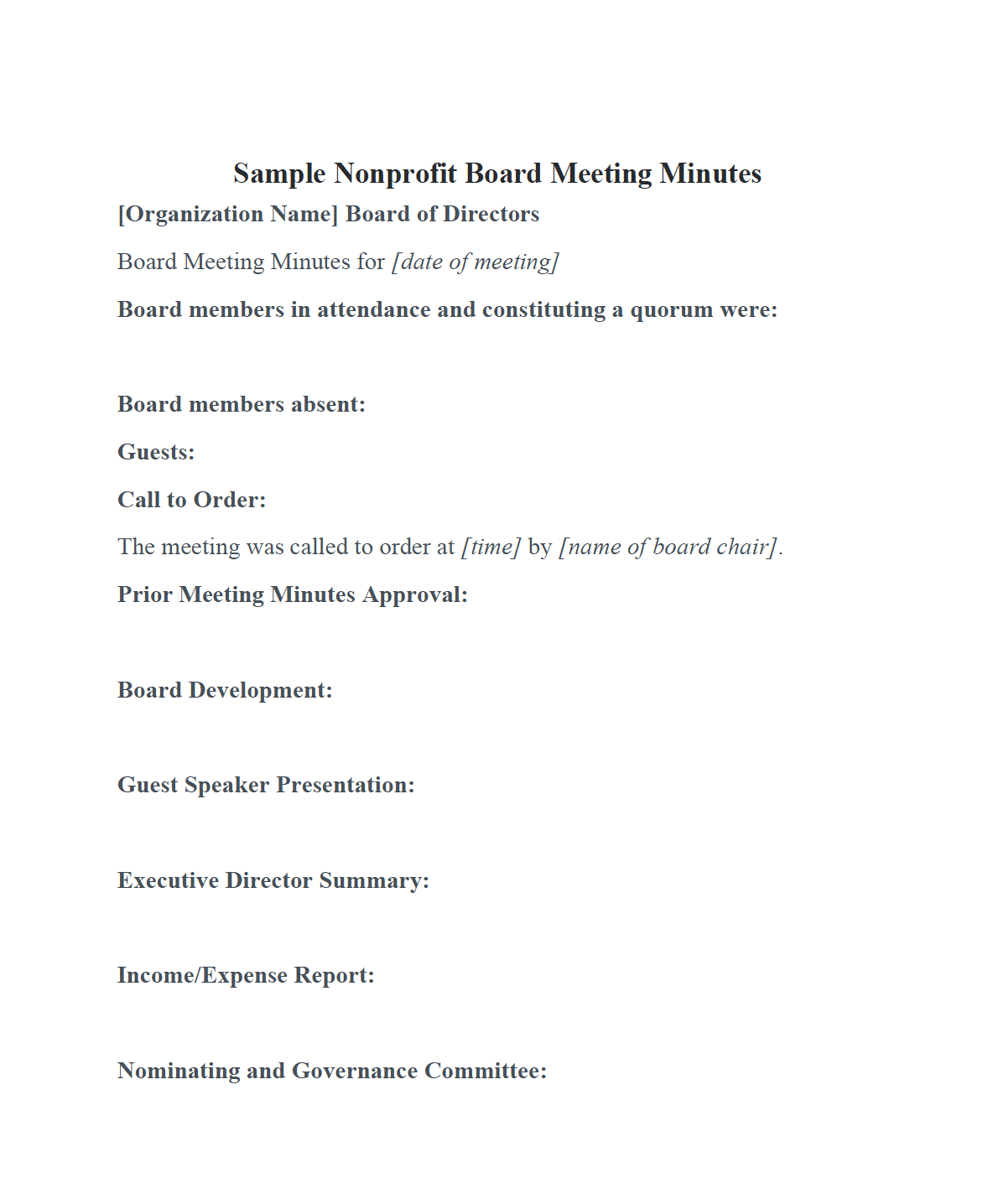
Capture reports, discussions, and motions. For each motion, record who proposed it, who seconded it, and the outcome of the vote. Summarize debate briefly, focusing on key points rather than transcribing every comment word for word.
Writing Minutes That Stay Clear and Compliant
Stick to facts and decisions. Avoid personal opinions, side conversations, or emotional language. Neutral wording protects the organization and keeps the record professional, especially if the minutes are ever reviewed by outside parties.
Note conflicts of interest and recusals. When a board member steps out of a vote, record the name and the reason. This detail demonstrates transparency and helps your nonprofit follow good governance practices and applicable legal requirements.
Track action items in a dedicated section. List each task, the person responsible, and the due date. Clear ownership turns discussion into progress, and the next meeting can open with a quick review of what has been completed.
Close with the adjournment time, the date of the next meeting, and the signature of the secretary. Some organizations also include a line for the chair’s approval. These final details make the document complete and ready for official filing.
Using Your Template Effectively
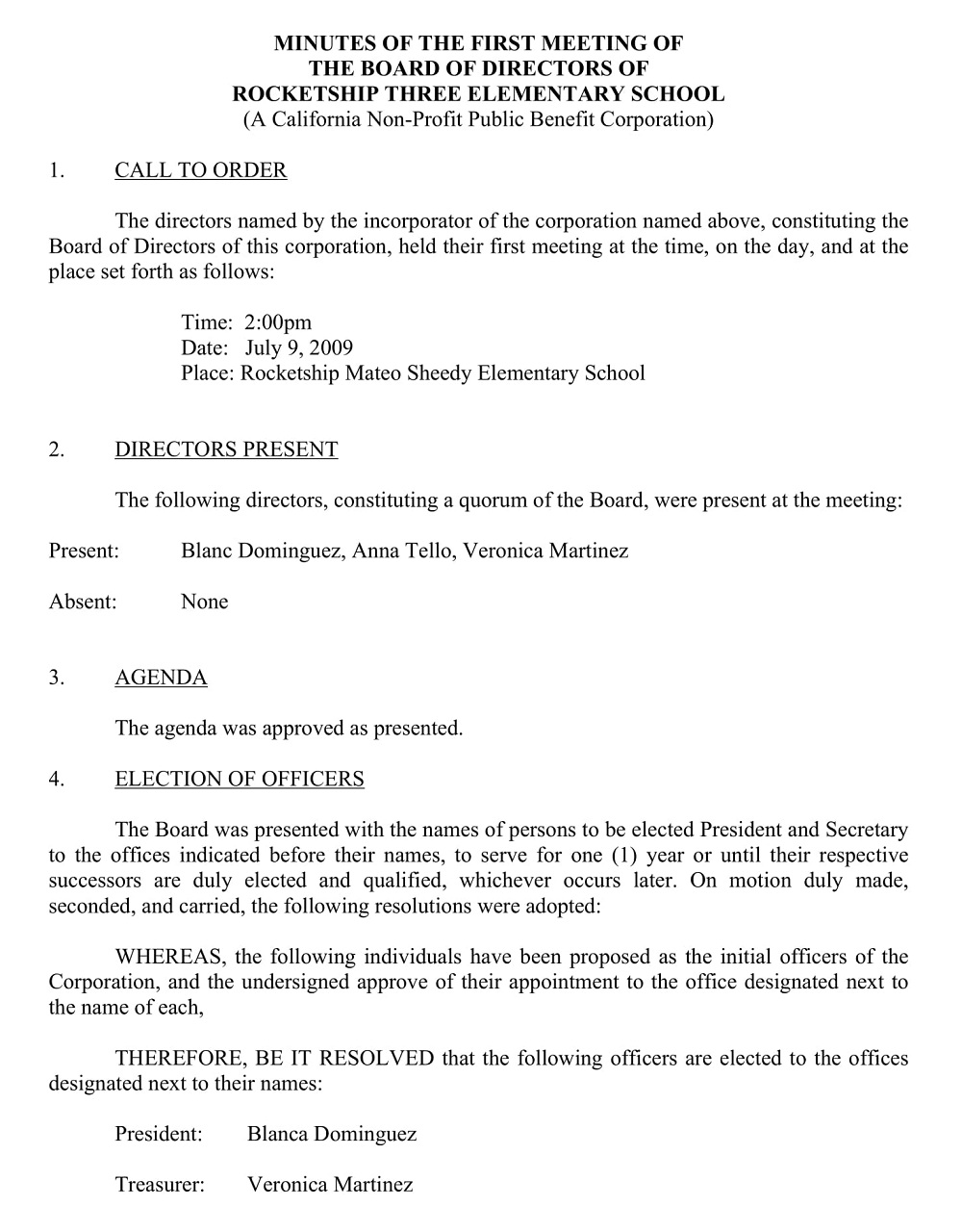
Choose a format that fits your team. Word and Google Docs are easy for volunteers, while shared drive folders keep everything accessible. Use a consistent file name, such as the year, month, and meeting type, so records are simple to locate.
Prepare before the meeting. Fill in the header, attendance list, and agenda items in advance, leaving space for notes. Having the structure ready lets the secretary focus on listening instead of formatting during a busy discussion.
Draft the minutes soon after the meeting while memories are fresh. Send them to the chair for review within a few days, then circulate them to the board. Timely distribution makes corrections quicker and approval smoother.
Store approved minutes securely and keep them according to your bylaws and local requirements. Back up digital copies and consider a read-only archive for finalized records. Reliable storage ensures your nonprofit can produce documentation whenever it is needed.